Back
Pocha
Pocha Wallet
A fictitious digital wallet with fiat and cryptocurrencies made for young brazilians.

About the project
Pocha is a financial services app, including a wallet and a payment system that allows you to send and receive money. The project aims to improve the user experience of a digital wallet app for young Brazilians.
The app allows users to easily make payments, transfer money, and manage their finances. Pocha is a ficticious project and came to be as a personal challenge.
Excited by the announcement of a Brazil digital currency (DREX), I started wondering what would I build if I wanted to create my very own digital wallet. Due to my experience in finances and crypto in the past years, I challenged myself to create a simple and elegant solution for young brazilians that would include fiat currency and crypto.
Discovery + Framing
I started by defining a project goal and the target audience. The goal is to build a digital wallet app for young Brazilians with the concept of financial freedom. My target audience is young brazilians between the ages of 18 and 24 who are tech-savvy and comfortable using mobile apps.
The second step was to deeply understand the user base and its needs. I started a desk research to better understand young brazilians and how they deal with finances, considering IBGE (Brazilian Statistics Institute) and other trustable sources.
The sources used were:
Atlas das juventudes (IBGE / NERI);
O perfil atual do jovem brasileiro e sua relação com o empreendedorismo (CGI.br/NIC.br);
TIC Domicílios 2022 (CETIC);
Pesquisa Global Insights (Serasa Experian);
The top countries for digital wallet use (Insider Intelligence / eMarketer);
Drex – Real Digital (Brazil Central Bank).
NERI data considered young brazilians from 15 to 24 years of age, while CGI.br/NIC.br data considered young brazilians from 16 to 30 years of age.

The desk research consisted of trustable sources such as IBGE, NERI, CGI.br/NIC.br and considered multiple quantitative and qualitative information that described young brazilians.
Key Takeaways of Discovery
Brazil's young population is made up of approximately 61% blacks and 38% whites.
When considering the socioeconomic situation and social capital, the biggest problems reported by Atlas das Juventudes are:
Dropping out and falling behind in school due to low income;
Unavailability of time to attend school or training programs due to occupation;
Difficulty accessing cultural goods (cinema, theater, shows, books, etc.);
Difficulty accessing health services.
Young brazilians are ultraconnected:
98% access social networks every day;
98% watch videos on demand every day;
Young brazilians are active and 63% already work:
38% study and work
26% only study
25% only work
11% Neither study or work
According to CGI.br/NIC.br, 67% of young Brazilians believe that schools should teach how to manage money, open a bank account and make investments.
According to Insider Intelligence, 20% of brazilian respondents stated that they use their digital wallet every day, while 21% said they use it a few times a week. There is also a group of people who test this once a month (18%) and those who used the tool once (13%).
Online payments and digital wallets are on the rise in Brazil.
Framing
As a result of the research phase, I started by creating profiles of students or young professionals who need an easy, convenient and secure way to manage their finances.

Next step consisted in creating a profile for each persona, considering their behaviors and their immediate needs when dealing with finances.
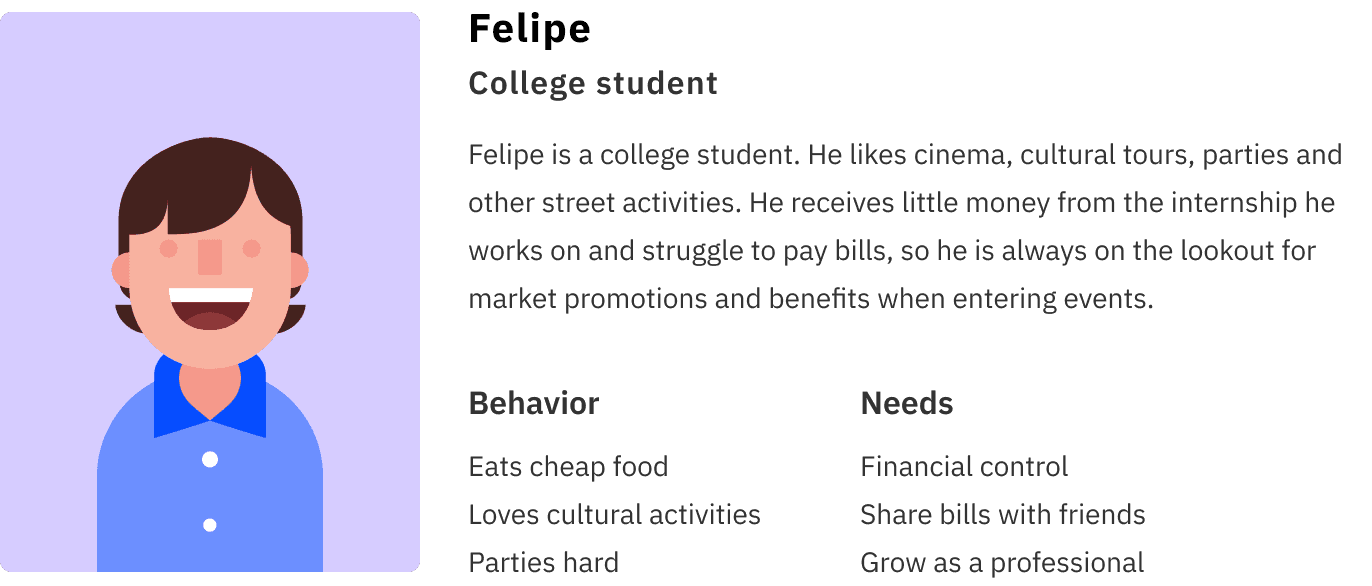


Next step consisted of analyzing the collected data, user profiles and build a value proposition canvas for each user category.


Key Takeaways of Framing
Users should have the freedom to use either fiat or cryptocurrency;
Visibility: users should be able to track savings and spendings;
Daily practical use: users should have easy access to trading actions;
Education and FAQ would be key for young brazilians, along with financial insights;
Loyalty programs and cashback would boost the application usage.
Creation and Prototyping
Once user requirements and needs were framed, I started to work in the brand name and identity.
Brand concept
The brand concept permeates the idea of something inspirational, young, vibrant and bringer of financial freedom. It’s a digital wallet that promises to be trustable in a fun and easy way.
After a few sketches, I came up with the name Pocha. Pocha is a variation of “Puxa”, a brazilian expression for surprise, joy, astonishment, wonder or admiration.


Ideation
With the value canvas of all personas at hand, I brainstormed some ideas and classified them considering change in experience against effort to produce.

The initial proposal consisted in let users provide information to form an financial profile and later provide insights, either for investments or expenditures control. That MVP would cover the immediate user needs to make transactions, diversify investments in multiple wallets and trade. In a second stage, once the MVP is built and validated, the proposal would also include a gamified education section and a loyalty program.
Information Architecture
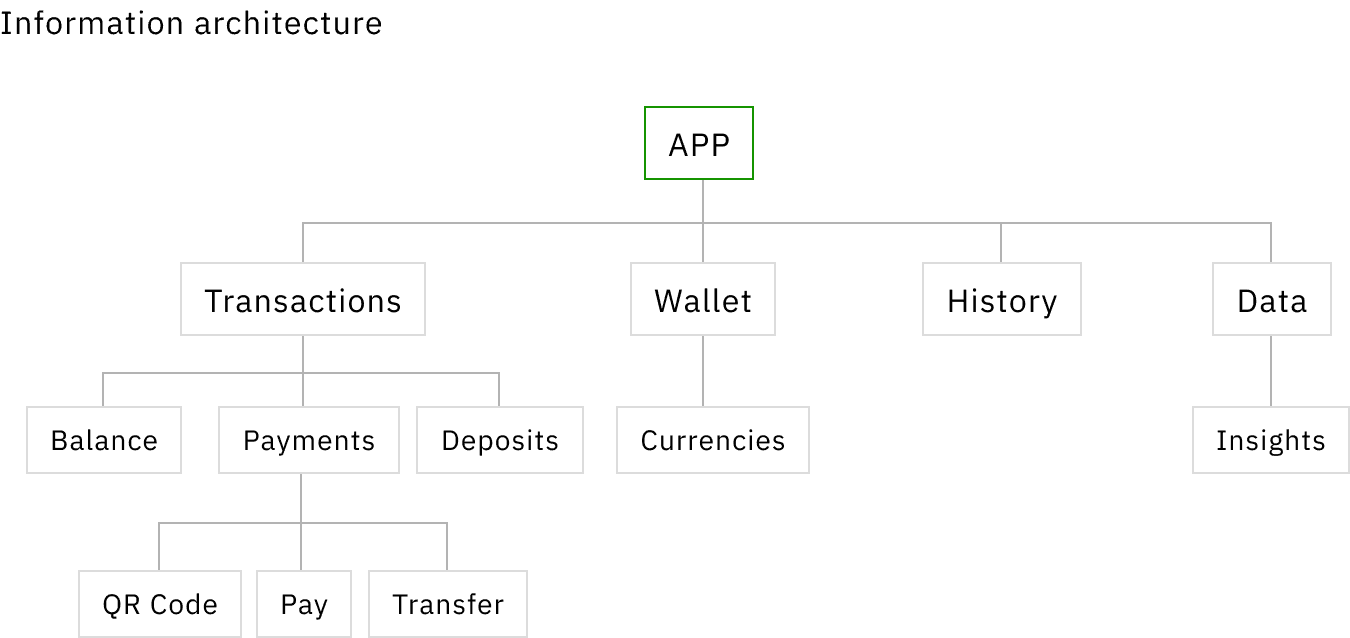
The information architecture of the application was built considering the features filtered after the ideation session. The application would prioritize payments and transactions for quick daily use and then embrace the wallets, history and financial insights sections.
Prototype
Based on the initial ideation sketches, I started to explore possibilities considering the information architecture.

UI Design
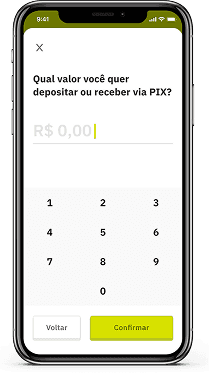
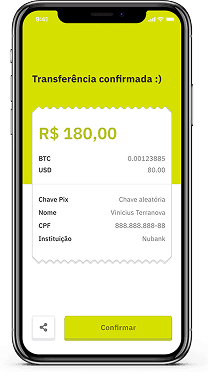
A high-fidelity version was built, with a total of 27 screens, covering all user flows for the MVP.




Testing
To evaluate the value proposition, I validated the proposal with a crypto market specialist and investor (venture capital).
The evaluation was composed of 1 phase:
Interview to evaluate the perceived value, sense of utility and desirability;
Open discussion about perceived value and potential competitors.
Key Takeaways of Prototyping and Testing
Brand was seen as friendly and trustable;
Users questioned the possibility of using other financial services, such as credit cards or loans;
When considering desirability and competitors, users mentioned a loyalty program with cashback might make a stronger case for fidelity.
Results and learnings
Pocha overall perception was positive and came to be a successful exercise, including payments, transfers and finance management. I seized the opportunity to present it to some investors that gave me critiques and advices about the project and how to turn it real.
Learnings
This project challenged me to come up with a solution for young brazilians daily routines;
It helped me to better understand young brazilians needs and how they deal with finances;
It helped me to better understand the need for investors and how to pitch a project idea.